

Diagnostic Bronchoscopy
Dr. Muhammad Ahmad
Medical Consultant
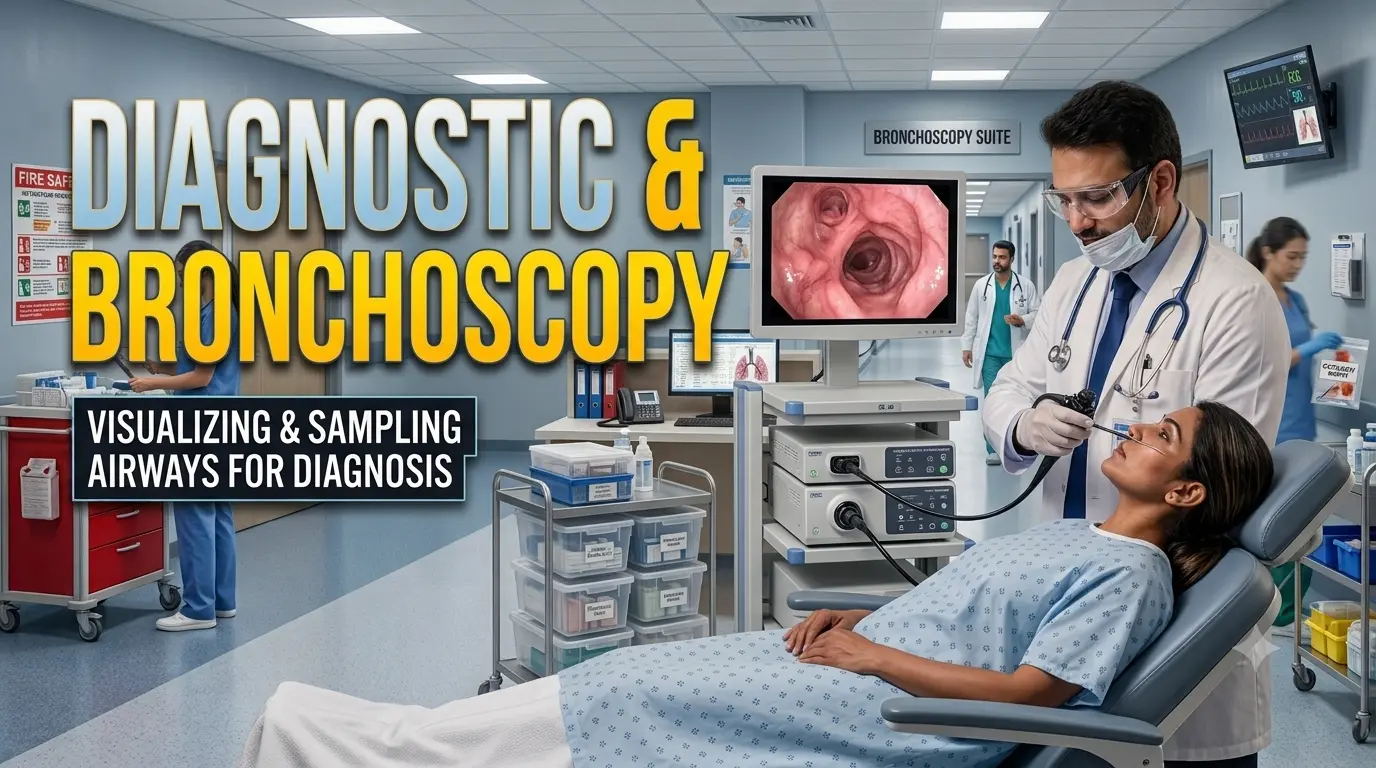
Diagnostic Bronchoscopy: What It Is, Why It’s Done, and What to Expect
When persistent respiratory issues arise—such as an unexplained cough, an unusual spot on a chest X-ray, or recurring chest infections—getting an accurate diagnosis is the first and most critical step toward recovery.
While non-invasive scans like X-rays and CT scans give doctors a clear outside view of your lungs, a diagnostic bronchoscopy allows them to look directly inside your airways.
Here is a straightforward guide to understanding what a diagnostic bronchoscopy is, why your doctor might recommend it, and how to prepare for the procedure.
What Is Diagnostic Bronchoscopy?
Diagnostic bronchoscopy is a safe, minimally invasive procedure that enables a pulmonologist (lung specialist) to examine your throat, larynx (voice box), trachea (windpipe), and lower airways (bronchi and bronchioles).
The procedure is performed using a bronchoscope—a thin, flexible tube equipped with a tiny light and camera at its tip. This tube is gently inserted through your nose or mouth, down your windpipe, and into your lungs. The camera feeds live, high-definition video to a monitor, allowing your care team to spot blockages, inflammation, tissue damage, or suspicious masses in real time.
Why Would You Need a Diagnostic Bronchoscopy?
Doctors recommend a diagnostic bronchoscopy when non-invasive tests show something abnormal or when symptoms don't resolve with standard treatment.
Common reasons include:
Investigating Abnormal Imaging: Checking spots, nodules, shadows, or scarring visible on a chest CT scan or X-ray.
Evaluating Persistent Symptoms: Finding the cause of a chronic, unexplained cough, shortness of breath, or coughing up blood (hemoptysis).
Identifying Lung Infections: Collecting fluid or tissue samples to diagnose hard-to-treat infections, such as tuberculosis, fungal infections, or severe pneumonia.
Biopsying Suspicious Tissue: Taking tiny samples from lung tissue or lymph nodes to check for conditions like sarcoidosis, lung cancer, or non-cancerous tumors.
Checking Airway Strictures or Blockages: Assessing narrowed airways, collapsed lung tissue (atelectasis), or physical obstructions.
Key Diagnostic Techniques Used During the Procedure
Beyond visually inspecting your airways, a bronchoscope allows doctors to collect vital laboratory samples in a few different ways:
Bronchoalveolar Lavage (BAL): A small amount of sterile saline is squirted into a specific segment of the lung and then gently suctioned back out. This fluid collects cells, bacteria, and microscopic particles, making it ideal for detecting infections or inflammatory conditions.
Bronchial Brush or Wash: A tiny brush or stream of salt water is used to collect cells gently from the lining of the airways.
Tissue Biopsy: Tiny forceps passed through the bronchoscope clip off small tissue samples from suspicious areas for lab analysis.
Endobronchial Ultrasound (EBUS): Some specialized bronchoscopes feature an ultrasound probe at the tip, allowing doctors to view and biopsy lymph nodes and tissue outside the airway wall without open surgery.
How to Prepare for the Procedure
Your medical team will give you specific instructions tailored to your health history, but standard preparations typically include:
Fasting: You will usually be asked to avoid eating or drinking for 4 to 8 hours before the procedure to prevent aspiration while under sedation.
Medication Adjustments: Inform your doctor about all medications and supplements you take—especially blood thinners, aspirin, or diabetes drugs. You may need to temporarily pause certain medications.
Arrange Transportation: Because you will receive local anesthesia and a mild sedative, you cannot drive yourself home. Make sure a friend or family member is available to accompany you.
What Happens During the Procedure?
A diagnostic bronchoscopy is typically an outpatient procedure, meaning you usually go home the same day.
Preparation & Numbing: You will receive a local anesthetic spray in your nose and throat to numb the area, minimize coughing, and reduce gagging.
Sedation: An intravenous (IV) sedative is administered to help you feel relaxed, sleepy, and comfortable throughout the test.
The Examination: The doctor carefully guides the bronchoscope down your airway. You will be able to breathe normally around the tube, and oxygen is provided through a small nasal cannula if needed.
Sample Collection: If necessary, the doctor will perform a lavage or take tissue samples. You won't feel pain during the biopsy because the inside of the lungs does not have pain receptors.
The entire procedure usually takes between 30 to 60 minutes.
Recovery and Aftercare
After the procedure is complete, you will rest in a recovery area while the sedation wears off—typically for 1 to 2 hours.
Eating & Drinking: Your throat will remain numb for a couple of hours. You must wait to eat or drink until the numbing medication wears off and your gag reflex returns to prevent choking.
Common Minor Side Effects: It is completely normal to experience a sore throat, mild hoarseness, a slight cough, or a few small specks of blood in your sputum for a day or two.
When to Call Your Doctor: Contact your care team immediately if you experience severe chest pain, persistent high fever, coughing up more than a tablespoon of blood, or severe difficulty breathing.
The Takeaway
A diagnostic bronchoscopy might sound intimidating, but it is a routine, highly safe, and invaluable procedure. By providing direct visual access and clear tissue samples, it gives your medical team the precise information needed to diagnose respiratory issues early and craft a personalized treatment plan.
Disclaimer: This article is for informational purposes only and is not a substitute for professional medical advice, diagnosis, or treatment. Always consult your doctor or pulmonologist regarding any medical condition or procedure.