

Pulmonary Rehabilitation
Dr. Muhammad Ahmad
Medical Consultant
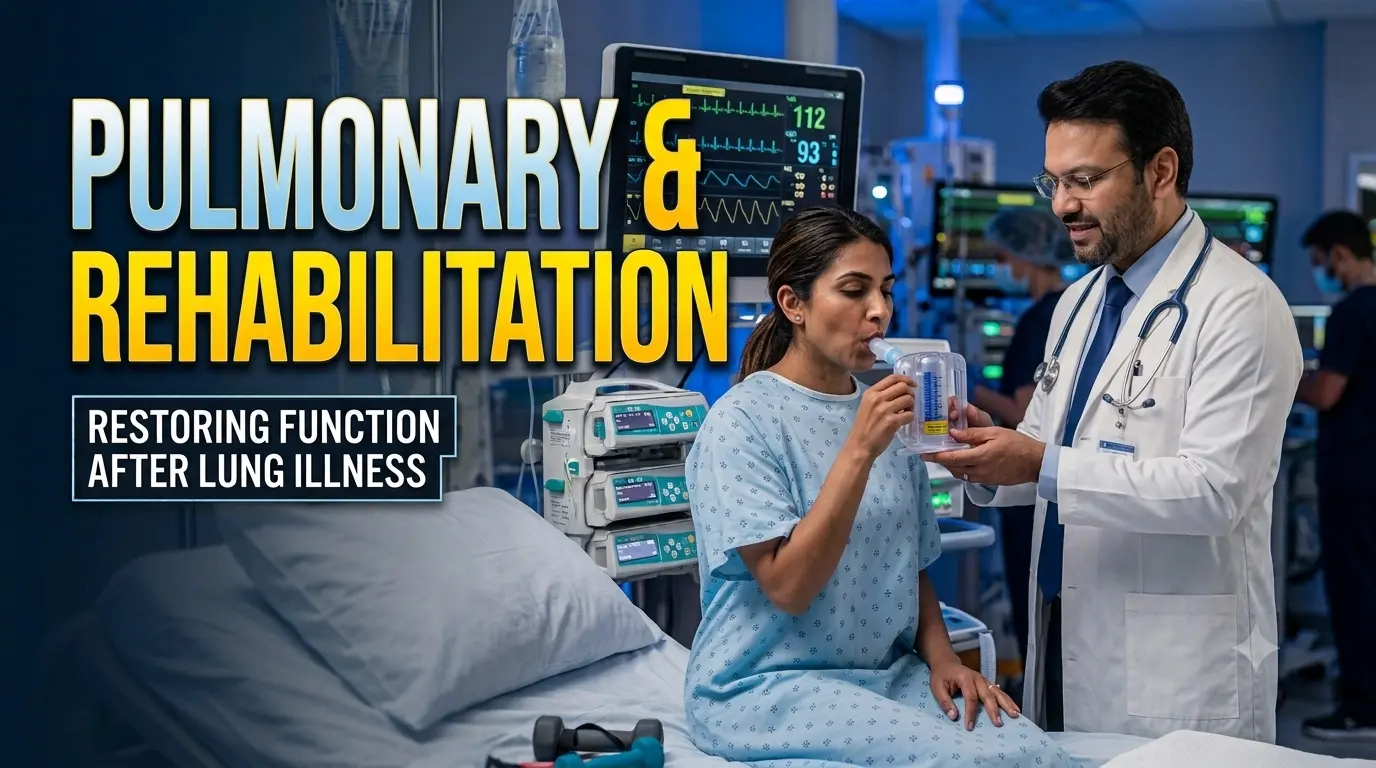
Pulmonary Rehabilitation: Reclaiming Your Strength and Breath
If you live with a chronic lung condition, simple tasks like climbing a flight of stairs, carrying groceries, or walking across the room can feel like overwhelming physical challenges. It is natural to react by slowing down and avoiding activity—but moving less causes muscles to weaken, which in turn makes breathing even harder.
This cycle of inactivity and breathlessness can be difficult to break alone. That is where pulmonary rehabilitation comes in.
Pulmonary rehab is one of the most effective, evidence-based treatments available to help people with chronic respiratory conditions build endurance, reduce daily breathlessness, and regain control over their lives.
What Is Pulmonary Rehabilitation?
Pulmonary rehabilitation is a comprehensive, medically supervised program designed specifically for individuals with chronic lung diseases. Rather than relying solely on medication, pulmonary rehab combines tailored physical exercise, education, and behavioral support.
It is typically run by a multidisciplinary team of healthcare professionals, including:
Pulmonologists (lung specialists who oversee your plan)
Respiratory therapists (who monitor breathing mechanics and oxygen levels)
Physical and occupational therapists (who guide safe physical conditioning)
Dietitians (who address nutritional needs and energy management)
Counselors or psychologists (who provide emotional and mental health support)
Who Can Benefit from Pulmonary Rehab?
Pulmonary rehab is recommended for anyone whose daily life is impacted by a chronic lung condition, regardless of age or fitness level. It is commonly prescribed for people with:
Chronic Obstructive Pulmonary Disease (COPD) (including chronic bronchitis and emphysema)
Pulmonary Fibrosis and interstitial lung diseases
Severe or persistent Asthma
Bronchiectasis and Cystic Fibrosis
Pulmonary Hypertension
Pre- and Post-Lung Surgery Patients (including lung volume reduction or lung transplantation)
Even if your lung function is permanently reduced, pulmonary rehab trains the rest of your body—especially your heart and peripheral muscles—to use available oxygen much more efficiently.
What Happens During a Pulmonary Rehab Program?
Programs usually run for 6 to 12 weeks, with supervised sessions held two or three times a week. Every program is customized based on an initial health evaluation and exercise stress test.
1. Monitored Physical Exercise
Exercise is the core of pulmonary rehab. Workouts are carefully paced, starting at a manageable intensity and gradually building over time. Your heart rate, blood pressure, and oxygen saturation levels are monitored continuously for safety.
Cardiovascular Training: Walking on a treadmill, using stationary bikes, or using arm ergometers to build endurance.
Strength Training: Light weights, resistance bands, or bodyweight exercises to strengthen arms and legs, making daily tasks (like lifting or standing) less exhausting.
Flexibility & Stretching: Improving range of motion and opening up the chest area.
2. Breathing Retraining
Specialists teach techniques to manage sudden breathlessness and improve oxygen intake:
Pursed-Lip Breathing: Keeps airways open longer during exhalation, letting trapped air escape.
Diaphragmatic Breathing: Strengthens the primary breathing muscle (the diaphragm) rather than overusing upper chest muscles.
Panic Management: Strategies to stay calm and regain control when severe shortness of breath occurs.
3. Comprehensive Health Education
Understanding your condition helps you manage it proactively. Educational sessions cover:
Proper use of inhalers, nebulizers, and supplemental oxygen.
Recognizing early warning signs of a flare-up (exacerbation) to prevent hospital visits.
Conserving energy during daily chores (pacing techniques).
Nutritional strategies to maintain muscle mass and healthy weight.
Key Benefits of Completing a Program
Research consistently shows that pulmonary rehabilitation delivers measurable improvements in health and quality of life:
Reduced Shortness of Breath: Learn to do more physical activity with less air hunger.
Increased Stamina and Strength: Rebuild muscle strength lost through inactivity.
Fewer Hospital Admissions: Better management of flare-ups leads to fewer emergency room visits.
Improved Mood and Confidence: Decreased anxiety and depression related to breathlessness, leading to greater independence.
How to Get Started
If you think pulmonary rehab could help you or a loved one, the first step is to talk to your doctor or pulmonologist. They can evaluate your current stability, provide a referral, and help locate an accredited program near you.
The Takeaway
Living with a chronic lung condition presents real challenges, but you don't have to navigate them without support. Pulmonary rehabilitation provides the guidance, structure, and tools needed to push past fear, build physical resilience, and get back to doing what matters most to you.
Disclaimer: This article is for informational purposes only and is not a substitute for professional medical advice, diagnosis, or treatment. Always consult your physician or respiratory specialist before starting a new exercise or rehabilitation program.