

Sleep Apnea & Sleep Disorders
Dr. Muhammad Ahmad
Medical Consultant
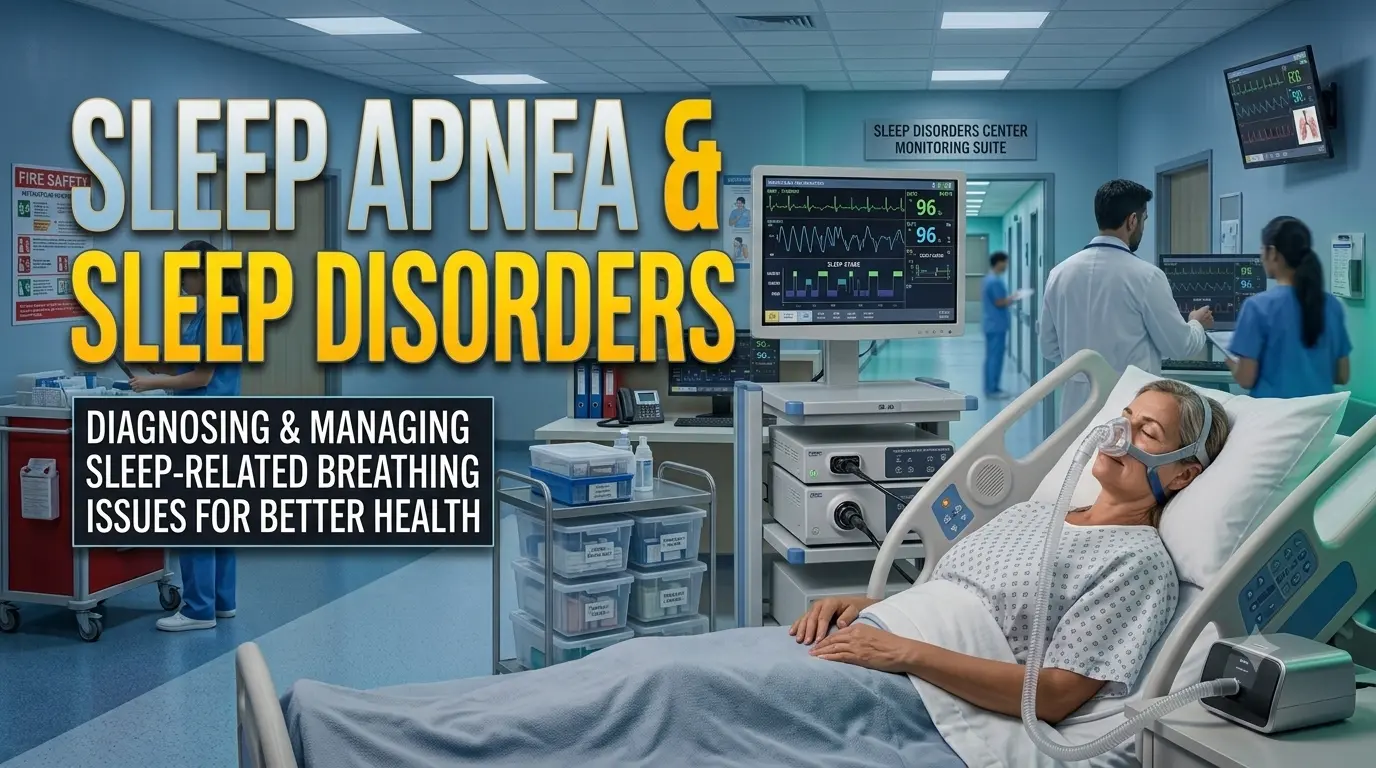
Restless Nights, Exhausted Days: Understanding Sleep Apnea & Sleep Disorders
If you spend eight hours in bed only to wake up feeling as though you haven't slept at all, you aren't alone. Millions of people drag themselves through the day on brain fog, extra caffeine, and sheer willpower, assuming that exhaustion is just a normal part of modern life.
More often than not, chronic daytime fatigue isn't a discipline problem—it's a sleep quality problem. Sleep disorders, particularly sleep apnea, frequently go undiagnosed for years, quietly impacting everything from cardiovascular health to daily mood.
Here is what you need to know about common sleep disorders, the subtle warning signs to look for, and how effective treatments can help you reclaim restful nights.
What Is Sleep Apnea?
Sleep apnea is a potentially serious condition in which breathing repeatedly stops and starts throughout the night. These pauses in breathing (apneic events) can last anywhere from a few seconds to over a minute, occurring dozens—or even hundreds—of times per hour.
The Three Main Types
Obstructive Sleep Apnea (OSA): The most common form. It occurs when the soft tissues at the back of the throat relax excessively during sleep, physically blocking the upper airway.
Central Sleep Apnea (CSA): Less common. This happens when the brain fails to send the proper electrical signals to the muscles that control breathing.
Complex Sleep Apnea Syndrome: A combination of both obstructive and central sleep apnea.
When your airway closes or your brain forgets to trigger a breath, your body experiences a sudden drop in blood oxygen. Your brain briefly wakes you up to clear the airway—often with a loud snort, gasp, or choke. Because these micro-awakenings last only seconds, you rarely remember them, but they completely disrupt your natural sleep architecture.
Spotting the Red Flags
While loud snoring is the signature symptom of obstructive sleep apnea, not everyone who snores has apnea, and not everyone with apnea snores loudly.
Key warning signs include:
Loud, persistent snoring interrupted by sudden pauses, choking, or gasping for air.
Waking up with a dry mouth, sore throat, or morning headache.
Unexplained daytime sleepiness (falling asleep while watching TV, working, or driving).
Difficulty focusing, memory issues, or frequent mood swings and irritability.
Frequent nighttime urination (waking up multiple times to use the bathroom).
Did You Know? Bed partners are often the first to notice sleep apnea. If someone mentions that you stop breathing or gasp in your sleep, take it seriously—it's one of the clearest indicators of the condition.
Beyond Apnea: Other Common Sleep Disorders
While sleep apnea gets much of the attention due to its cardiovascular risks, several other sleep disorders can steal your rest:
Insomnia: Difficulty falling asleep, staying asleep, or waking up far too early. It can be short-term (triggered by stress) or chronic.
Restless Legs Syndrome (RLS): An uncontrollable urge to move the legs, usually accompanied by uncomfortable crawling or tingling sensations that worsen in the evening or night.
Narcolepsy: A neurological condition that impairs the brain's ability to regulate sleep-wake cycles, leading to extreme daytime sleepiness and sudden "sleep attacks."
Circadian Rhythm Disorders: A misalignment between your internal biological clock and your environment (common in shift workers or extreme night owls).
Why Treatment Matters (It’s Not Just About Tiredness)
Untreated sleep disorders do far more than make you sleepy. Chronic sleep deprivation and oxygen drops put immense strain on your body over time, significantly increasing the risk of:
High blood pressure (hypertension)
Heart disease, heart attacks, and irregular heartbeats (atrial fibrillation)
Type 2 diabetes and insulin resistance
Motor vehicle accidents due to drowsy driving
Depression and anxiety disorders
Paths to Better Rest and Recovery
The good news? Sleep disorders are highly treatable. Getting a proper diagnosis usually begins with an evaluation by a primary care physician or a sleep specialist, followed by an in-lab or home sleep study (polysomnography).
Effective Treatments for Sleep Apnea
CPAP (Continuous Positive Airway Pressure): The gold standard treatment for moderate to severe OSA. A small machine delivers gentle, pressurized air through a mask to keep your airway open while you sleep.
Custom Oral Appliances: Fitted by trained dentists, these devices gently shift your lower jaw forward to keep the airway open (ideal for mild to moderate OSA).
Position Therapy & Lifestyle Changes: Weight management, avoiding alcohol before bed, and sleeping on your side instead of your back can reduce mild symptoms.
Advanced Therapies: Hypoglossal nerve stimulation (an implantable device that stimulates airway muscles) or surgical options for anatomical obstructions.
Practical Habits for Quality Sleep
Regardless of whether you have a clinical disorder, healthy sleep hygiene supports your overall recovery:
Keep a strict routine: Go to bed and wake up at the exact same time every day, even on weekends.
Cool and dark room: Keep your bedroom temperature around 15–19°C (60–67°F) and completely dark.
Power down screens: Turn off phones, tablets, and TVs at least 60 minutes before bed to allow natural melatonin production.
Watch evening intake: Limit caffeine past mid-afternoon and avoid heavy meals or alcohol close to bedtime.
The Takeaway
Sleep is not a luxury—it is a fundamental pillar of physical and mental health. If you wake up exhausted every morning despite spending enough hours in bed, don't write it off as aging or stress. Speak with a doctor or sleep specialist. Identifying and treating a sleep disorder can literally transform your waking life.
Disclaimer: This article is for informational purposes only and does not constitute medical advice. If you suspect you have a sleep disorder, consult a healthcare professional for diagnosis and personal treatment options.